
Four Tippah County Property Value Figures
The assessor starts by splitting the site from what sits on it. Land and improvements are valued separately, and Mississippi's classification ratio converts the true-value estimate into assessed value. A deed or parcel record may add one more number: the consideration from a prior transfer.
| Value | What It Is | Where |
|---|---|---|
| True or appraised value | County estimate of full value for mass appraisal | Assessor record |
| Assessed value | True value multiplied by the statutory class ratio | Assessment roll |
| Last sale price | Consideration associated with a past transfer, when reported | Deed and parcel fields |
| Land and improvements | Separate components behind the total | Assessor parcel card |
Mississippi applies ratio rules by class. Owner-occupied single-family residential property, Class I, is generally assessed at 10 percent of true value. Class II, covering other real property, carries 15 percent. A small assessed figure therefore does not signal a bargain. It may simply be the statutory fraction of the assessor's much larger estimate.
Mississippi Ratios Shape Tippah County Assessed Value
The core formula is easy to state. True value times the assessment ratio times millage produces the tax. Classification comes before any comparison of two figures, though, because a homestead-class residence and other real property can carry different ratios even when their full-value estimates sit close together.
Check the class printed on the parcel record first. Do not reverse-engineer market value from a tax bill without confirming exemptions, district millage and the applicable year. Each of those inputs can move on its own.
Keep the terms separate. Assessed value is a statutory tax base. It is not identical to true value, taxable value, a recent sale price or a private appraisal.
Read Tippah County Land and Improvement Values
Land value covers the site itself. Improvement value covers buildings and other taxable additions. Their sum explains the total, but it tells you nothing about construction quality, deferred maintenance, or how much a renovation actually added to market value.
The public parcel layer's schema includes assessed land, improvements, and total assessed value. It also carries acreage, homestead, and sale fields. A field appearing in the schema does not guarantee every parcel has a complete entry. When you compare nearby parcels, keep the year and classification the same.
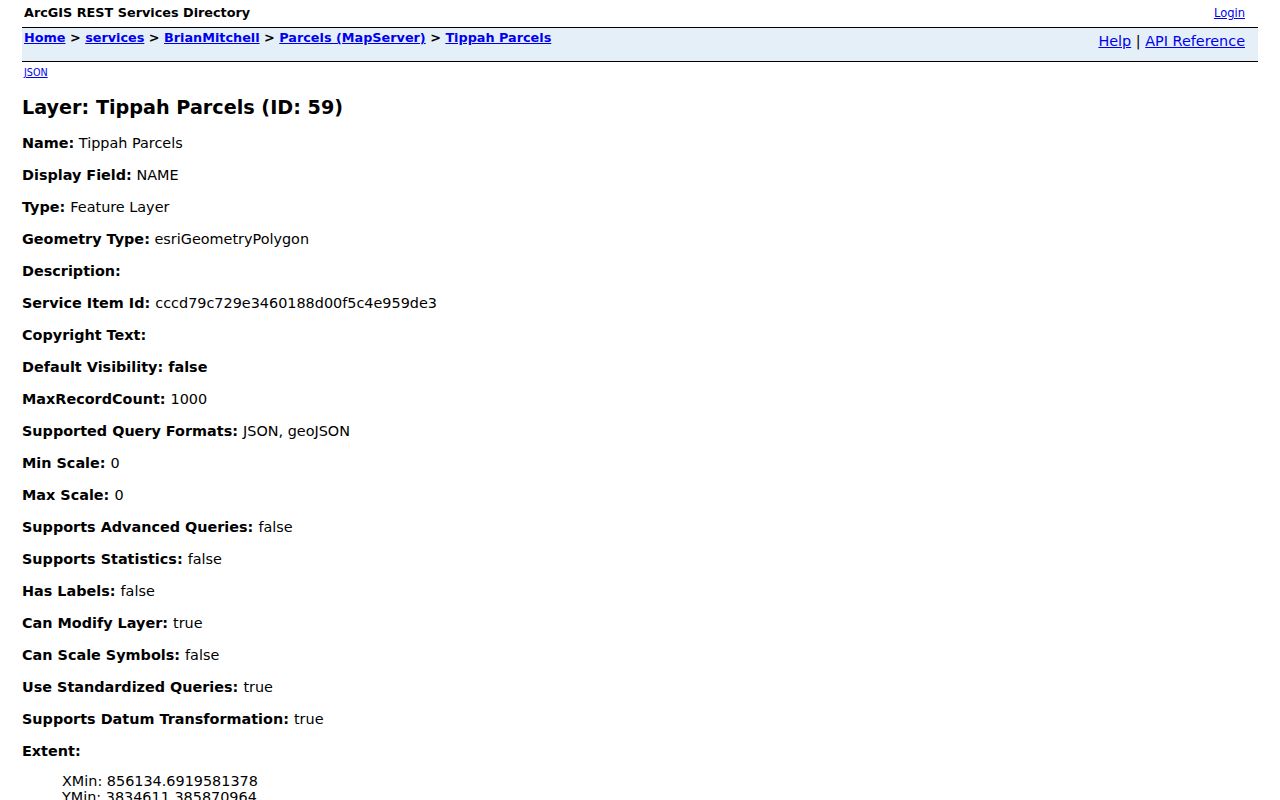
Treat these fields as leads back to the official roll. The layer is also handy for preserving parcel and deed references whenever the paid appraisal portal is out of reach.
Why Tippah County Sale Price and Value Differ
A recorded sale is one transaction with its own date and terms. Family transfers can sit behind a plain number. So can multiple parcels bundled together. Estates, nominal consideration, and other hidden conditions can too. The assessor's figure, by contrast, comes from a countywide appraisal process. It does not come from negotiation between that particular buyer and seller.
Before assigning a deed's consideration to a single tract, verify which parcels it conveyed. Deed book, page, instrument number, and the legal description are stronger controls. A bare price field is weaker than any of them.
January 1 Anchors Tippah County Property Value Records
January 1 anchors the assessment roll. Ownership and status on that date control, so a closing later in the year can leave the prior owner of record on the roll even though the deed was recorded months earlier. Improvements, classification changes and exemption adjustments can likewise show up only on a later cycle.
When timing matters, write down the assessment year, the search date and the deed recording date. That small chronology usually resolves the apparent conflict. Neither record has to be wrong.
Look Up a Tippah County Property Value
Delta Property Link and Appraisal accept searches by owner, address, parcel number, PPIN and section-township-range. A parcel number or PPIN is the safest key when an address carries rural-route or city-label ambiguity.
- Find the parcel in Delta Property Link by address, parcel or PPIN.
- Record the tax year, class, land, improvement, total and homestead fields.
- Open the cited deed or Chancery index result to verify the last transfer.
- Compare only genuinely similar parcels with the same value year and property class.
- True value
- The assessor's full-value estimate for taxation.
- Assessed value
- The class-adjusted amount to which millage is applied.
- Taxable value
- The assessment remaining after applicable exemptions or adjustments.
The Delta service runs on subscription, at $30 monthly or $330 annually. Its own disclaimer notes the material may lag or omit courthouse activity. For consequential questions, preserve the year and confirm with the Tax Assessor or Chancery Clerk.
Homestead Changes a Tippah County Taxable Value
Mississippi homestead applications generally run from January 1 through April 1. Eligibility and classification can change the taxable result without touching the property's physical characteristics. So compare the homestead field and assessment class first. Don't read two different tax outcomes as two different market opinions.
Take questions about a specific exemption to the Tippah County Tax Assessor/Collector. Bill calculations, delinquency and tax sale procedure work differently. Continue to the Tippah County property tax records guide.
Challenge a Tippah County Assessed Value with Evidence
A strong review file earns respect. Include the parcel card, the tax year, photographs, measurements, corrected characteristics, comparable sales and any appraisal you have. The Board of Supervisors hears assessment challenges. Mississippi Department of Revenue guidance explains the state appeal route and its deadlines.
Start with the assessor so factual errors surface early. Ask which year's value is under review and which filing date controls. Simply disagreeing with a sale estimate is not enough. Your evidence must address the county valuation at issue.
Paid Access Does Not Certify Tippah County Values
The Delta portal's fee buys online access, nothing more. It is not a certified appraisal or a title opinion. The county landing page itself warns that uploads may be incomplete or trail courthouse activity. For any formal use, request the record from its custodian.
The Tippah County Tax Assessor sits at 102-D North Main Street in Ripley and answers at 662-837-9956. The Chancery Clerk, at 115 East Spring Street and 662-837-7374, holds the recorded instrument behind a sale.
Limits of a Tippah County Property Value
A county value exists to serve the assessment system. It does not examine every condition a purchaser or licensed appraiser might investigate. It is not a survey, environmental review, title search or guarantee of sale proceeds.
Value versus price. A Tippah County assessed value is not a prediction of what the property will sell for. Obtain a current licensed appraisal when a defensible market opinion is required.